How variation in our natural body odour could put pay to the perfume industry. Whether healthy faces belong to healthy people. And I finally turn self-help guru and dish out some advice on how to stop your one night stands demanding a wedding ring.


Download the MP3

Rate me!
Rate, review, or listen in iTunes or in Stitcher.


"Helen suddenly remembered that it was day 23 of her cycle." New research by Kelly Gildersleeve shows that women's body odour is slightly more attractive around ovulation, and slightly less attractive a few days later, when fertility is low.

The articles covered in the show:

Gildersleeve, K. A., Haselton, M. G., Larsen, C. M., & Pillsworth, E. G. (2012). Body odor attractiveness as a cue of impending ovulation in women: Evidence from a study using hormone-confirmed ovulation. Hormones and Behavior, 61(2), 157-166. Read summary

Gray, A. W., & Boothroyd, L. G. (2012). Female facial appearance and health. Evolutionary Psychology, 10(1), 66-77. Read paper

Jonason, P. K., & Buss, D. M. (2012). Avoiding entangling commitments: Tactics for implementing a short-term mating strategy. Personality and Individual Differences, 52(5), 606-610. Read summary

An experiment that shows we really do like what we see. Also, how voices can cycle from attractive to unattractive and back again, and why you’re more likely to remember a fish if you see it next to an attractive man’s face. Yep, that's not a typo...


Download the MP3

Rate me!
Rate, review, or listen in iTunes or in Stitcher.


According to research by Kevin Allan, you are unlikely to forget this fish.

The articles covered in the show:

Re, D. E., Coetzee, V., Xiao, D., Buls, D., Tiddeman, B. P., Boothroyd, L. G., et al. (2011). Viewing heavy bodies enhances preferences for facial adiposity. Journal of Evolutionary Psychology, 9(4), 295-308. Read summary

Allan, K., Jones, B. C., DeBruine, L. M., & Smith, D. S. (in press). Evidence of adaptation for mate choice within women's memory. Evolution and Human Behavior. Read summary

Pipitone, R. N., & Gallup, G. G. (in press). The unique impact of menstruation on the female voice: implications for the evolution of menstrual cycle cues. Ethology. Read summary

The recipe for the perfect man. Tall, dark and handsome? How about tall, rich and with huge feet?


Download the MP3

Rate me!
Rate, review, or listen in iTunes or in Stitcher.


You know what they say about men with big feet, right?

The articles covered in the show:

Stulp, G., Pollet, T. V., Verhulst, S., & Buunk, A. P. (in press). A curvilinear effect of height on reproductive success in human males. Behavioral Ecology and Sociobiology. Read summary

Jonason, P. K., Li, N. P., & Madson, L. (in press). It is not all about the Benjamins: Understanding preferences for mates with resources. Personality and Individual Differences. Read summary

Fessler, D. M. T., Stieger, S., Asaridou, S. S., Bahia, U., Cravalho, C., de Barros, P., et al. (in press). Testing a postulated case of intersexual selection in humans: The role of foot size in judgments of physical attractiveness and age. Evolution and Human Behavior. Read summary

How beauty is contributing to the worldwide population explosion, why men turn into idiots when a woman steps into the room, and why Meg Ryan was right: how frequently do women fake orgasm and why do they do it?


Download the MP3

Rate me!
Rate, review, or listen in iTunes or in Stitcher.


From Miriam Law-Smith's study, composite faces of 18 women with lowest ‘ideal number of children’ (left) and 18 women with highest ‘ideal number of children’ (right).

The articles covered in the show:

Law Smith, M. J., Deady, D. K., Moore, F. R., Jones, B. C., Cornwell, R. E., Stirrat, M., et al. (in press). Maternal tendencies in women are associated with oestrogen levels and facial femininity. Hormones and Behavior. Read summary

Nauts, S., Metzmacher, M., Verwijmeren, T., Rommeswinkel, V., & Karremans, J. C. (in press). The mere anticipation of an interaction with a woman can impair men’s cognitive performance. Archives of Sexual Behavior. Read summary

Kaighobadi, F., Shackelford, T. K., & Weekes-Shackelford, V. A. (in press). Do women pretend orgasm to retain a mate? Archives of Sexual Behavior. Read summary

What’s the best way to investigate jealousy? In the lab, or on TV? Also, gossip: what is it good for, and how is idle chit chat linked to beauty? And why sharing Sunday lunch with mum and dad can make you broody.


Download the MP3

Rate me!
Rate, review, or listen in iTunes or in Stitcher.


Using footage from a TV show about cheaters caught out on camera, Barry Kuhle investigated sex differences in the causes of jealousy.

The articles covered in the show:

Kuhle, B. X. (2011). Did you have sex with him? Do you love her? An in vivo test of sex differences in jealous interrogations. Personality and Individual Differences, 51(8), 1044-1047. Read summary

Massar, K., Buunk, A. P., & Rempt, S. (in press). Age differences in women’s tendency to gossip are mediated by their mate value. Personality and Individual Differences. Read summary

Waynforth, D. (in press). Grandparental investment and reproductive decisions in the longitudinal 1970 British cohort study. Proceedings of the Royal Society B-Biological Sciences. Read summary

Absolute power corrupts absolutely, but does it turn you into a cheat? Also, can a high-powered computer program work out what makes a face attractive? And why are women who prefer marriage to a short-term fling more forgiving of a wonky nose?


Download the MP3

Rate me!
Rate, review, or listen in iTunes or in Stitcher.


Did Bill cheat because power went to his head? And would Hillary have done the same thing in his shoes? New research by Joris Lammers suggests some answers.

The articles covered in the show:

Lammers, J. S., J. I., Jordan, J., Pollman, M., & Stapel, D. A. (2011). Power increases infidelity among men and women. Psychological Science, 22(9), 1191-1197. Read summary

Said, C. P., & Todorov, A. (2011). A statistical model of facial attractiveness. Psychological Science, 22(9), 1183-1190. Read summary

Quist, M. C., Watkins, C. D., Smith, F. G., Little, A. C., DeBruine, L. M., & Jones, B. C. (in press). Sociosexuality predicts women’s preferences for symmetry in men’s faces. Archives of Sexual Behavior. Read summary

The risk factors for rape: is sexual assault indiscriminate or are some women at greater risk than others? I speak with Carin Perilloux to find out. Also this month, can a conservative fall for a liberal, or is the bedroom a politics-free zone? And how exercising with the opposite sex bewilders your biochemistry.


Download the MP3

Rate me!
Rate, review, or listen in iTunes or in Stitcher.


The Slut Walks that were held worldwide earlier this year demonstrate that advice about how women might avoid sexual assault is often unwelcome, especially if it focuses on changing women's behaviour. However, as Carin Perilloux told me in this month's interview, "it should be presented as 'here is all the information; you're educated women, you can make your own choices, you decide what you want to do.'" Listen in to discover more about Carin's research on the risk factors for rape.

The trailer for Politics of Love, a romcom set during the 2008 presidential campaign which is currently enjoying a very, very limited release. Coincidentally enough, political scientist Casey Klofstad published research this month suggesting that politics might be important for long-term couples, but that very few people advertise their political predilections when seeking a partner.

The articles covered in the show:

Felson, R. B., & Cundiff, P. R. (in press). Age and sexual assault during robberies. Evolution and Human Behavior. Read summary

Perilloux, C., Duntley, J. D., & Buss, D. M. (2011). Susceptibility to sexual victimization and women’s mating strategies. Personality and Individual Differences, 51, 783-786. Read summary

Miller, S. L., Maner, J. K., & McNulty, J. K. (in press). Adaptive attunement to the sex of individuals at a competition: the ratio of opposite- to same-sex individuals correlates with changes in competitors' testosterone levels. Evolution and Human Behavior. Read summary

Klofstad, C. A., McDermott, R., & Hatemi, P. K. (in press). Do bedroom eyes wear political glasses? The role of politics in human mate attraction. Evolution and Human Behavior. Read summary

How the roundness of a man’s face can predict whether he’s a liar, why testosterone fuelled men don’t like helping around the house, and how a woman’s fertility influences the warmth of her personality.


Download the MP3

Rate me!
Rate, review, or listen in iTunes or in Stitcher.


Physiognomy used to be considered a pseudoscience, but it's now experiencing a resurgence, thanks in part to improved methods and a more rigid application of the scientific method.

The articles covered in the show:

Haselhuhn, M. P., & Wong, E. M. (in press). Bad to the bone: facial structure predicts unethical behaviour. Proceedings of the Royal Society of London B. Read summary

Pollet, T. V., van der Meij, L., Cobey, K. D., & Buunk, A. P. (2011). Testosterone levels and their associations with lifetime number of opposite sex partners and remarriage in a large sample of American elderly men and women. Hormones and Behavior, 60(1), 72-77. Read summary

Markey, P., & Markey, C. (in press). Changes in women’s interpersonal styles across the menstrual cycle. Journal of Research in Personality. Read summary

Does being attractive always help? We discover the social advantages that come with being slightly less than supermodel material. Also, do attractive people have attractive brothers and sisters, and where are all the female comedians? Do women prefer hearing jokes to telling them?


Download the MP3

Rate me!
Rate, review, or listen in iTunes or in Stitcher.


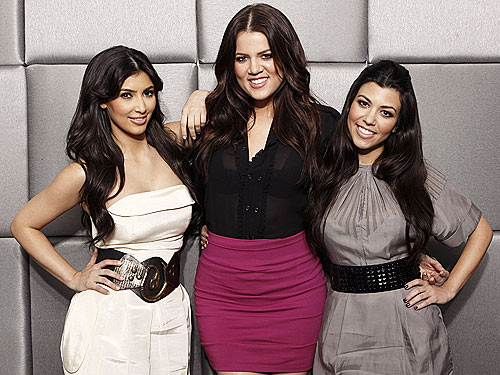
Same-sex siblings, like the Kardashian sisters, tend to be similar in attractiveness. But what about opposite-sex siblings?

If you find the section on humour interesting, you might like this episode in which I interview Norm Li about his humour research.

The articles covered in the show:

Agthe, M., Spörrle, M., & Maner, J. K. (2011). Does being attractive always help? Positive and negative effects of attractiveness on social decision making. Personality and Social Psychology Bulletin, 37(8), 1042-1054. Read summary

Garver-Apgar, C. E., Eaton, M. A., Tybur, J. M., & Emery Thompson, M. (in press). Evidence of intralocus sexual conflict: physically and hormonally masculine individuals have more attractive brothers relative to sisters. Evolution and Human Behavior. Read summary

Wilbur, C. J., & Campbell, L. (2011). Humor in romantic contexts: Do men participate and women evaluate? Personality and Social Psychology Bulletin, 37(7), 918-929. Read summary

Satoshi Kanazawa's recent blog post “Why black women are less physically attractive than other women” has ignited a firestorm of protest across the web. In this special episode, we find out if his controversial claim stands up to scrutiny.


Download the MP3

Rate me!
Rate, review, or listen in iTunes or in Stitcher.

In this special episode I talk with biological anthropologist Mark Shriver, Nanjala Nyabola, an Oxford graduate student who wrote a comment piece for the Guardian about Kanazawa's article, and psychologists Scott Barry Kaufman and Jelte Wicherts, who blogged about the controversy here and here and also reanalysed the original data. You can read Kanazawa's blog post here.


A graph from the reanalysis of Kanazawa's data by Wicherts and Kaufman, illustrating the lack of a difference in perceived attractiveness amongst women of different ethnic backgrounds (click to enlarge).

Is beauty in the eye of the beholder? We cast a glance at the pupil, iris and white of the eye, and discover that love is far from blind. Plus we find out how a roving eye can be good for your relationship.


Download the MP3

Rate me!
Rate, review, or listen in iTunes or in Stitcher.


Provine et al. confirmed that a reddened sclera is less attractive than whiter-than-white whites of the eye, whilst Peshek and colleagues showed that a dark limbal ring (the narrow circle at the edge of the iris) also boosts your beauty. Modified from Joanna Malinowska/freestocks.org

The articles covered in the show:

Provine, R. R., Cabrera, M., Brocato, N. W., & Krosnowski, K. A. (in press). When the whites of the eyes are red: A uniquely human cue. Ethology. Read summary

Peshek, D., Semmeknejad, N., Hoffman, D., & Foley, P. (2011). Preliminary evidence that the limbal ring influences facial attractiveness. Evolutionary Psychology, 9(2), 137-146. Read paper

DeWall, C. N., Maner, J. K., Deckman, T., & Rouby, D. A. (2011). Forbidden fruit: inattention to attractive alternatives provokes implicit relationship reactance. Journal of Personality and Social Psychology, 100(4), 621-629. Read summary

How a higher pitched voice can make you sound more attractive, and suspicious. Also, war: what is it good for? We investigate the link between warfare and sex. And how do our hormones influence perceptions of art?


Download the MP3

Rate me!
Rate, review, or listen in iTunes or in Stitcher.


Georgia O'Keeffe's "Black Iris III". Rudski showed pictures by O'Keeffe to women when they were in the fertile and non-fertile phases of their menstrual cycle. 31% of fertile women interpreted the pictures as sexual, but only 9% of non-fertile women saw the sexual double-meaning (for the record, O'Keeffe herself always denied her art had sexual connotations. She would say that, though, wouldn't she?).

The articles covered in the show:

Fraccaro, P. J., Jones, B. C., Vukovic, J., Smith, F. G., Watkins, C. D., Feinberg, D. R., et al. (2011). Experimental evidence that women speak in a higher voice pitch to men they find attractive. Journal of Evolutionary Psychology, 9(1), 57-67. Read summary

O'Connor, J. J. M., Re, D. E., & Feinberg, D. R. (2011). Voice pitch influences perceptions of sexual infidelity. Evolutionary Psychology, 9(1), 64-78. Read paper

Chang, L., Lu, H. J., Li, H., & Li, T. (in press). The face that launched a thousand ships: The mating-warring association in men. Personality and Social Psychology Bulletin. Read summary

Rudski, J. M., Bernstein, L. R., & Mitchell, J. E. (in press). Effects of menstrual cycle phase on ratings of implicitly erotic art. Archives of Sexual Behavior. Read summary